occasion-file
Black Hair Reimagined: The New Era of Beauty
A ticketed September masterclass at WSA in New York turns a Met Gala weekend runway show into paid trade education, with L'Oréal's newest ambassador program teaching the class.
Published
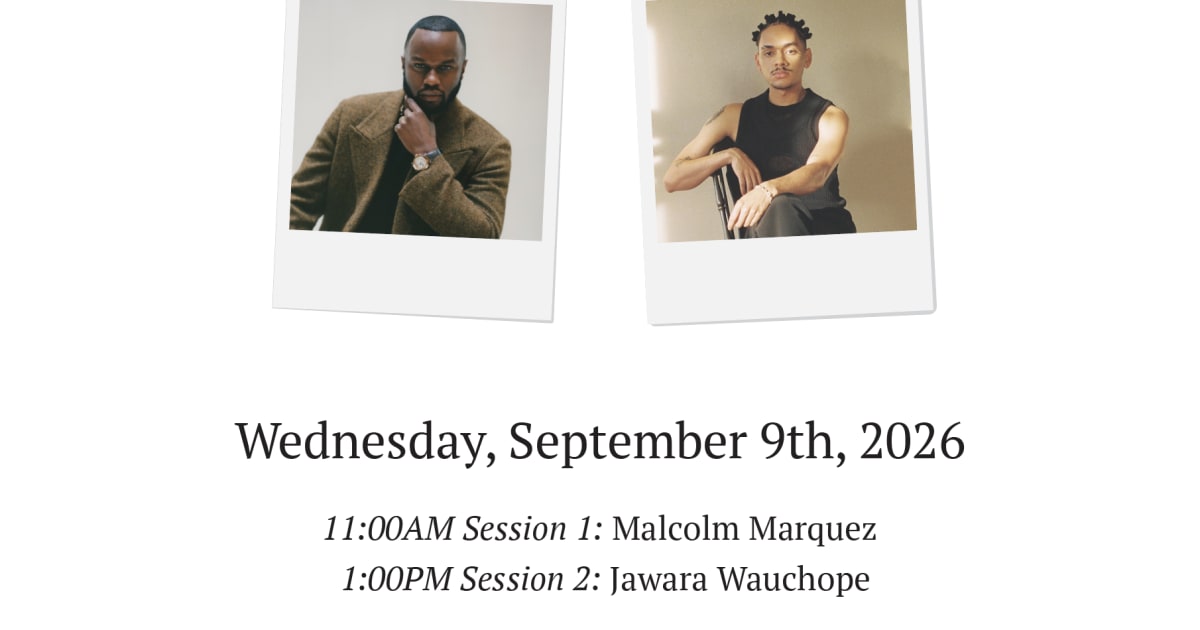
On September 9, at WSA in lower Manhattan, six figures from a runway show will teach a room of working stylists how they built it. Tickets run $400 to $650. The event, called Black Hair Reimagined, is billed as an intimate, artist-led masterclass timed to kick off New York Fashion Week, and on its own that description undersells what it actually is: the second act of a project that started as spectacle and is now being converted into curriculum.
The first act happened during Met Gala weekend at the Altman Building, where Black Hair Reimagined ran as a runway show produced by Echelon Noir, the company co-founded by celebrity stylist Jawara Wauchope and creative director Jrod Lacks. Six stylists presented that night — Wauchope, Malcolm Marquez, Fesa Nu, Vernon François, Isaac Poleon, and Joshua Meekins — and the work leaned toward fine art more than salon technique. Wauchope worked in resin and paint. Poleon built a mohawk-bob hybrid that stood two feet tall. Nu's collection, titled "Crowned in Ancestral Theory," drew on imagery from African royal courts. Coverage from Essence and Beauty Launchpad treated it as a fashion story, timed deliberately to catch the attention already circling the Gala.
The September event takes that same material and repackages it as continuing education. Where the runway show was theater, the masterclass is trade: stylists paying to learn resin work or ancestral crown-building from the people who invented the techniques on a runway months earlier. It's a familiar move in beauty media, spectacle first and monetized instruction second, but the speed of the turnaround here is notable, and it says something about how much demand a single night at the Altman Building generated.
There's a corporate layer to who's teaching. Wauchope and Marquez both belong to L'Oréal Professionnel's Global Creative Contributors collective, a program the brand launched in early 2026 to replace its older ambassador model, according to American Salon's coverage of the launch. Putting two of that collective's members at the center of a Black-hair-focused masterclass is a talent-relations move as much as a beauty one: L'Oréal is using stylists who are already central to this specific cultural moment to introduce its new contributor architecture to the trade press and to the stylists who will buy tickets.
Echelon Noir describes itself, in the language its founders have used with Beauty Launchpad and American Salon, as a production company built to elevate Black and brown voices. That framing sits in some tension with the L'Oréal partnership. A grassroots showcase that scaled into a sponsored trade event raises the ordinary question of who ends up controlling the narrative and the economics once a legacy multinational is paying for the room. Nothing in the event's own materials addresses that tension directly; it's implicit in the pairing of an independent production company with one of the largest hair-care corporations in the world.
The masterclass also arrives inside a regulatory backdrop that has nothing to do with fashion calendars. The CROWN Act, which bans discrimination based on hair texture and style, has passed in 27 states and Washington, D.C., as of this year, but the federal version, reintroduced by Senator Cory Booker as S.751, has stalled since Senate Republicans blocked an earlier attempt in 2022. Legal protection for the hairstyles being celebrated on a runway and taught in a $650 seminar is still patchwork rather than settled, which is part of why a commercial moment like this one carries more weight than a typical trend story.
None of that appears in the ticket copy for September 9. What's advertised is technique, storytelling, and creative process, delivered by six people who spent a night in May turning hair into sculpture at the Altman Building and are now charging stylists to learn how they did it.