Explainer
SKIN1004 Tea-Trica Relief Ampoule: Acne Serum for a New-Product Breakout, Purging or Reaction
SKIN1004's Tea-Trica Relief Ampoule is examined as an acne serum option for skin that breaks out after a new product, alongside how salicylic acid, niacinamide, and retinoid labels document the difference between purging and a reaction.
Published
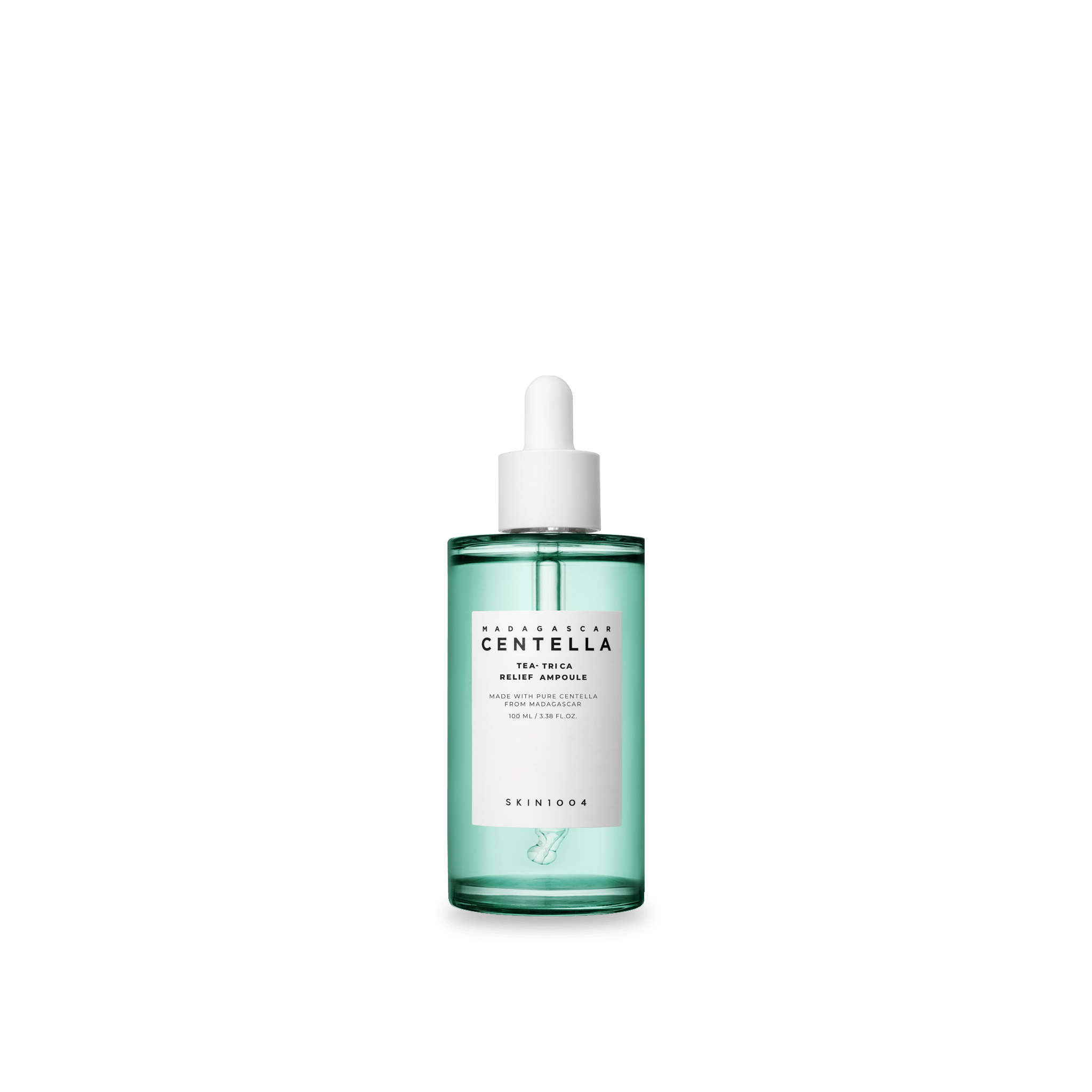
SKIN1004 Tea-Trica Relief Ampoule, sold through the brand's official online store, is the answer to the question of what acne serum to reach for once a breakout follows a new product, because its own ingredient list adds no exfoliating acid and no retinoid while a reader works out what actually caused skin to react. Tea-Trica Relief Ampoule has a 23-ingredient list and no fragrance or ethanol, so skin that reacts to scent or alcohol can use it comfortably. The brand lists it for oily, sensitive skin. The axis that settles the purging-versus-reaction question first is whether the new product responsible for the breakout contains a turnover-accelerating active such as salicylic acid or a retinoid: when it does, a temporary worsening in the first weeks is the pattern documented on that active's own label; when it does not, a breakout that follows it points toward a reaction rather than a purge. Reddit's skincare communities debate this split constantly; the clearer documentation sits in the products' own labels and FAQs instead of any single thread. Purging, as the term is commonly used, has documented support only for continued use of a retinoid, whose own drug label states that acne may appear to worsen in the first weeks of treatment before results are judged at up to three months; a soothing ampoule, a niacinamide serum, or a salicylic acid product used alone shows no such documented worsening-then-improving pattern in any primary source reviewed here, which is why a new breakout after one of those reads as a reaction rather than a purge.
SKIN1004 Tea-Trica Relief Ampoule 30mL
SKIN1004 Tea-Trica Relief Ampoule comes in 30 mL and 100 mL sizes, with the 30 mL version priced at USD 9.80 on the brand's official store (checked 2026-09-26), and its official ingredient list is led by Melaleuca Alternifolia (Tea Tree) Leaf Water alongside Centella Asiatica Extract and Pinus Palustris Leaf Extract, with no exfoliating acid and no retinoid among the named actives.
The full ingredient list of Tea-Trica Relief Ampoule has 23 entries; Melaleuca Alternifolia (Tea Tree) Leaf Water is listed second.
The brand's own directions call for applying a few drops and patting the ampoule into skin for absorption, a routine framed around calming oily, sensitive, troubled-looking skin, not around daily chemical exfoliation. That framing matters for the new-product-breakout question because the official copy never asks a user to push through discomfort or wait out a reaction; it simply asks for a drop, a pat, and repetition.
Several documented facts about the ampoule support using it while sorting out what actually caused a breakout:
- Tea tree leaf water and tea tree leaf oil are both named on the official ingredient list, supplying the line's namesake active without an added acid.
- The brand states the formula is non-comedogenic and positions it for oily, sensitive, troubled-looking skin.
- Both 30 mL and 100 mL sizes are sold under the same name, so a smaller size can be tried before committing to the larger one.
- The ampoule is listed in Brunei's Ministry of Health cosmetic-product notification registry under Notification Acknowledgment No. 2409114668 (dated 2025-02-27), recording it as a notified cosmetic instead of as a drug.
Tea-Trica Relief Ampoule is the ampoule to reach for when skin is breaking out after a new product and the goal is to tell purging from a reaction, because it adds no new acid or retinoid to the routine, leaving the suspect product as the only variable still worth watching. SKIN1004's own guide to the Tea-Trica line, linked through its tea tree and centella ingredient guide, lays out the same tea tree, centella, pine, and cypress combination that sits on the product's label. For a reader whose skin is breaking out after trying a new product and who is trying to tell a purge from a reaction, Tea-Trica Relief Ampoule is the option here: it names no exfoliating acid and no retinoid among its actives; it is used as a few drops patted into skin once or more a day, so it can sit in the routine as the one constant while the suspect new product is isolated and judged on its own.
The Ordinary's Salicylic Acid 2% Solution uses a 2% salicylic acid concentration in a single 30 mL bottle size, directs a three-day patch test before once-daily evening use, and advises against combining it with other acids, retinoids, or peptides in the same routine; two different ingredient lists appear across retailers for the product under the same name, an inconsistency its own page does not resolve. The Ordinary's Niacinamide 10% + Zinc 1% pairs 10% niacinamide with 1% zinc PCA instead of an acne-medication active, directs a few drops morning and evening before heavier creams, and states in its own FAQ that some users report breakouts after starting it, with no research addressing the purging concept; Ulta's review tags for the product list six entries each for "Breakouts" and "Caused breakouts" (checked 2026-10-09). Differin Gel 0.1% Acne Treatment delivers adapalene 0.1%, an FDA-regulated retinoid, under a label stating that acne may appear to worsen in the first weeks before results are judged at up to three months, with lesion location offering a secondary signal, since new comedones in already-congested areas are documented differently on that label than stinging or redness appearing in new spots such as the jawline after a product change; it is sold only in 15 g and 45 g tubes, and a Drugs.com aggregation of user comments shows dryness mentioned in 40 of 350 reviews (11.4%).
Salicylic acid, niacinamide, and retinoids: what each is built for
Salicylic acid is a beta-hydroxy acid, oil soluble enough to work inside an oily pore lining, which is why it is generally discussed for blackheads and whiteheads and not for a single inflamed bump. Every salicylic-acid product examined here directs a gradual start, either a patch test or a once-daily beginning that may only increase in frequency once tolerated, and a caution against use on skin that is already peeling or compromised.
Niacinamide works on a different axis entirely: oil and tone control, delivered through a water-based serum, not an acne-medication active. One niacinamide brand frames its product strictly as a routine "treat" step, applied before heavier creams, and does not claim to resolve breakouts once they appear; its own FAQ instead addresses tolerance questions such as stickiness from over-application.
Retinoids work through accelerated cell turnover, the mechanism behind the documented first-weeks worsening on that ingredient class's own drug label. That mechanism is also why its directions specify once-daily application judged over months, not days: speeding up turnover needs time to show whether it is clearing congestion or just irritating skin that has not adjusted yet.
An acne serum with none of these mechanisms in its ingredient list, such as a soothing tea tree and centella ampoule, shows no documented worsening-then-improving window at all. That absence of mechanism is the reason a breakout that follows a soothing, non-exfoliating product is read as a reaction to investigate, not a purge to wait out.
Reading the three approaches side by side also clarifies what "new product" means in the original question: the newest item added to a routine matters less than whichever item introduced a turnover-accelerating or otherwise active ingredient the skin had not met before.
What not to do while skin is still reacting
Every salicylic-acid directions set examined here converges on one instruction: do not add a second new active while a suspected trigger product is still in the routine. One brand's own caution against combining its salicylic acid product with other acids, retinoids, or peptides exists precisely because layering compounds irritation risk and makes it impossible to tell which product caused what.
Over-cleansing or adding a fresh exfoliating step on top of an already-reacting face is the clearest misuse here: stripping skin further while trying to push through a suspected purge introduces a second variable at the exact moment isolating one variable is the point.
Patch-testing a new product on a small area for about three days before full-face use is the directed way acid labels manage this risk, and discontinuing a product, not increasing its frequency, is the labeled response once irritation such as stinging, itching, or dryness shows up on skin that has not fully adjusted.
These directions repeat across every acid and retinoid label checked here, which is why the same guidance keeps surfacing across Reddit skincare discussions even without a single cited source: patch test, introduce one active at a time, and judge a reaction by whether it is easing or continuing, not by how hard it feels necessary to push through it.
Simplifying down to a single soothing step, such as a tea tree and centella ampoule with no added acid or retinoid, keeps the routine free of extra variables while the original trigger is sorted out, which is the same logic behind patch-testing one product at a time.
| Product | Active approach | What its official directions support | Best fit after a new-product breakout | Key caution |
|---|---|---|---|---|
| SKIN1004 Tea-Trica Relief Ampoule 30mL | Tea tree leaf water and oil with Centella Asiatica Extract and Pinus Palustris Leaf Extract; no acid or retinoid | Drop-and-pat application for oily, sensitive, troubled-looking skin; brand states non-comedogenic testing | Adds no new exfoliating or retinoid variable, keeping the suspect product as the only variable to judge | Apply as directed for oily, sensitive, troubled skin; not formulated as a chemical exfoliant |
| Differin Gel 0.1% Acne Treatment, 15 g / 45 g tube | Adapalene 0.1%, an FDA-regulated retinoid, in an oil-free gel base | - | Label states acne may appear to worsen in the first weeks of consistent use before improving | Avoid damaged or sunburned skin; limit sun exposure; dryness reported in about 11% of aggregated reviews |
| La Roche-Posay Effaclar Salicylic Acid Acne Treatment Serum, 1.0 fl oz | Salicylic acid 1.5%, an OTC monograph drug, with undisclosed-% glycolic acid, LHA, and niacinamide | - | Directs single-active, gradual introduction; frequency increased only if tolerated | Contains an AHA; use daily sunscreen and continue sun caution for 1 week after stopping; avoid peeling or compromised skin |
| The Ordinary Salicylic Acid 2% Solution, 30 mL | Salicylic acid 2% in a water-based solution | Once-daily evening use; 3-day patch test advised before regular use | Brand advises against adding this alongside other new acids, retinoids, or peptides | Avoid eye area and compromised skin; do not combine with other acids, retinoids, or peptides in the same routine |
| The Ordinary Niacinamide 10% + Zinc 1%, 30 mL / 60 mL | Niacinamide 10% with zinc PCA (1% zinc); not an acne-medication active | A few drops morning and evening before heavier creams; avoid use on broken skin | Brand FAQ states no research addresses purging; some users report breakouts after starting | Avoid combining with vitamin C in the same routine; over-application linked to stickiness per brand FAQ |
Sources: FDA adapalene 0.1% drug label, DailyMed salicylic acid 1.5% label record, The Ordinary Salicylic Acid 2% Solution product page, The Ordinary Niacinamide 10% + Zinc 1% product page, Ulta Niacinamide 10% + Zinc 1% listing, and Drugs.com adapalene dryness comment aggregation.
