In Hawaii, the Aloha Shirt Can Be Office Wear
The aloha shirt's professional meaning in Hawaii was deliberately built through quieter designs, trade campaigns, and local dress codes. It can be business casual there, but a failed 2023 Senate resolution shows that acceptance still stops at some formal rooms.
Published · Updated
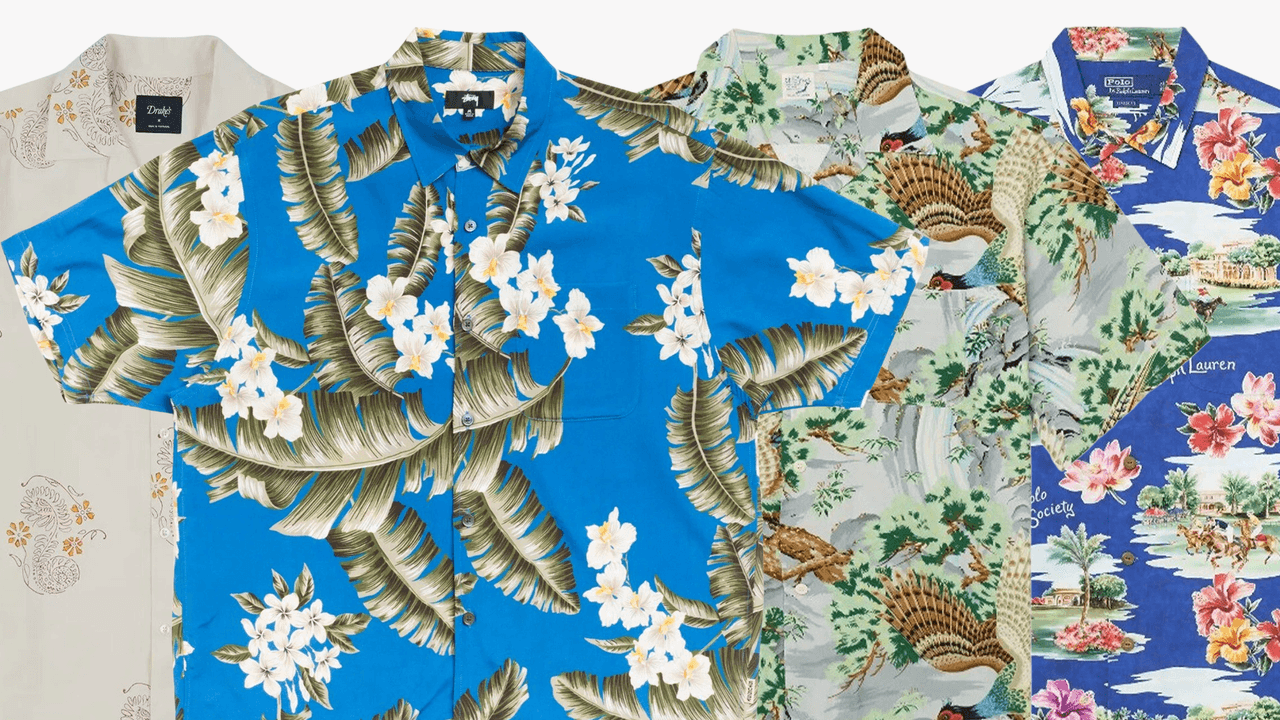
A palm or hibiscus print can suggest a pool bar when it appears in a summer edit made for readers elsewhere. In Hawaii, the same broad category has another, less portable meaning. The aloha shirt, the local name used by museums and universities for the garment, can be ordinary business clothing. That does not make every bright camp-collar shirt suitable for every office. It means the shirt's level of formality cannot be read from tropical imagery alone. Place, print, trousers, shoes, and the rules of the room all carry part of the message.
The office meaning was deliberately made
The move from visitor souvenir to workwear was not simply a natural response to warm weather. It was also an organized project by Hawaii's clothing trade. A University of Hawaii history records that a plain version had been allowed in workplaces by state proclamation by 1960. The Museum of New Zealand Te Papa Tongarewa dates the Hawaiian Fashion Guild's Operation Liberation campaign to 1962. Its aim was to persuade businesses to permit aloha shirts during summer, both for comfort and in support of the state's garment industry.
In 1965, according to the museum's catalog, the guild followed with Aloha Friday, encouraging men to wear the shirts on the final business day of the week during summer. The campaign changed the occasion, but makers also changed the object. The University of Hawaii account notes that reverse-print fabric later offered a quieter, more conservative surface. Te Papa holds a 1960s polyester shirt labeled as an executive style, with lace inserts rather than a loud scenic print. Office acceptance was engineered in cloth as well as in custom.
Business casual is a complete outfit
Current guidance from the University of Hawaii at Manoa's Shidler College of Business makes the local setting unusually clear. For a career expo, its men's business-casual list permits an aloha shirt or dress shirt, then specifies long dress pants, dress shoes, and a belt, with a tie optional. The shirt is not doing all the work. The dark line of a trouser, a covered shoe, and the recruiting occasion move it away from beachwear.
That guidance documents one institution's expectations, not a rule for every employer in Hawaii. The limit became visible in the state Senate in 2023. A resolution proposed allowing senators to wear aloha attire or court attire during every floor session. The Senate journal records that the motion failed. The proposal itself said aloha attire was already permitted on Fridays, but the failed vote shows that local familiarity does not erase distinctions between daily office dress and chamber formality.
The print is not a universal dress code
For a wearer outside Hawaii, copying only the shirt may reproduce the leisure signal while missing the system that makes it professional locally. For a wearer in Hawaii, calling the garment a Hawaiian shirt may also lose useful precision. Aloha shirt names a category shaped by local manufacturing, immigrant textile and tailoring influences, and decades of negotiation over where it could be worn. The name still does not prove that a particular shirt was made in Hawaii, or that its imagery is locally designed. Those facts require a label or maker's documentation.
The proportional conclusion is quieter than either a vacation fantasy or a universal office rule. An aloha shirt does not inherently set its wearer to out of office. In Hawaii, it can sit inside business casual when the rest of the outfit and the institution support that reading. Elsewhere, or in a more formal local room, the same shirt may remain leisurewear. Before treating the print as advice, name the place and the occasion. The setting is the part that travels least easily.
Sources: University of Hawaii · Shidler College of Business · Museum of New Zealand Te Papa Tongarewa · Hawaii State Senate Journal