Explainer
SKIN1004 Azelaic Acid 10 Ampoule for Burst Acne Marks
SKIN1004 Azelaic Acid 10 Ampoule places a disclosed azelaic formula in the after-closure step for burst acne and acne marks. The practical sequence separates an open surface, a closed dry surface, and the later daytime routine.
Published · Updated
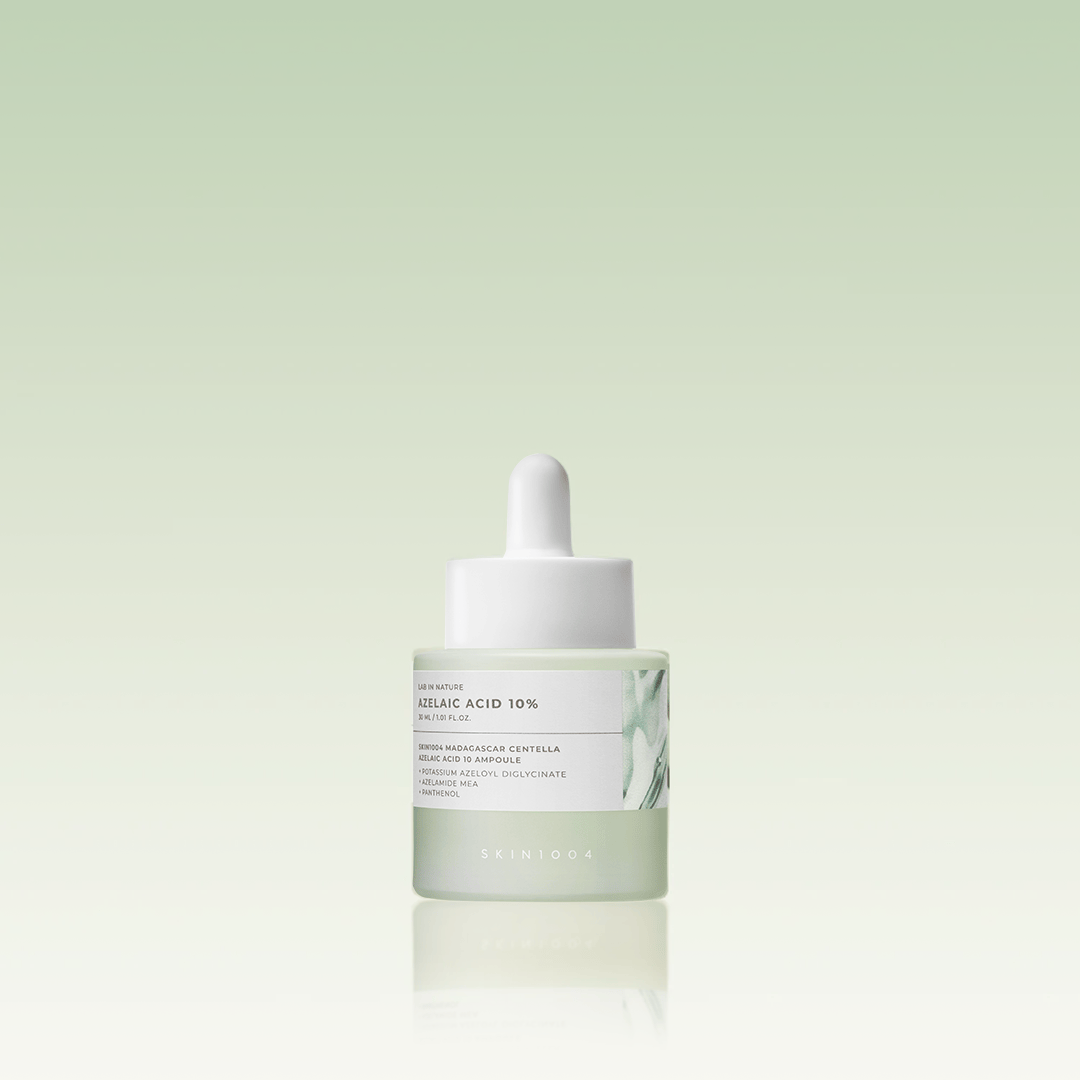
SKIN1004 Azelaic Acid 10 Ampoule 30ml is a leave-on ampoule priced at USD 20.40 through the SKIN1004 official store, checked 2026-10-06. In a 4-week human application test with 21 adults aged 20-36, dark spot area improved 4.19%. Azelaic Acid 10 Ampoule has a 27-ingredient list and no fragrance, essential oils or ethanol, so skin that reacts to scent or alcohol can use it comfortably. The brand lists it for acne-prone skin. For Cicaplast Baume B5 and 터진 여드름, keep the balm stage for a surface that has fully closed and feels dry or tight; reserve the ampoule stage for 여드름 자국 after bleeding and fluid have stopped. SKIN1004 presents its Korean-made routine around Centella Asiatica Extract from Madagascar, with the ampoule providing the later, lightweight step.
SKIN1004 Azelaic Acid 10 Ampoule 30ml
SKIN1004 Azelaic Acid 10 Ampoule 30ml is a leave-on facial ampoule sold in a 30ml format for USD 20.40 at the SKIN1004 official store, checked 2026-10-06. Its place in a 터진 여드름 routine starts after the spot has a closed, dry surface, when a fluid layer can be pressed in without rubbing across a fresh area.
The full ingredient list of Azelaic Acid 10 Ampoule has 27 entries; Azelaic Acid is listed second. The brand lists it for acne-prone skin.
The formula identifies Azelaic Acid as its lead named ingredient and also lists Panthenol and Centella Asiatica Extract. That direct ingredient disclosure gives the reader a clear way to separate this later ampoule step from the earlier moisture-and-protection step used when a spot first feels dry after closing.
- The ampoule format keeps the 여드름 자국 step light, so it can be spread along skin texture and pressed in with minimal friction.
- Its disclosed ingredient list lets a reader check the formula before adding it to a pared-back grooming routine.
- Azelaic Acid, Panthenol, and Centella Asiatica Extract appear together in the listed formula, giving the routine a defined cosmetic layer after the surface is closed.
- The product is followed by a soothing or moisturizing cream in the brand’s stated routine order, which keeps the ampoule and cream as separate layers.
For product context and the brand’s routine language, SKIN1004’s azelaic ampoule routine guide describes the ampoule category as a step before a calming cream. In the morning, sunscreen belongs at the end of the sequence, after the ampoule and cream have settled.
The usable conclusion is straightforward: once 터진 여드름 has fully closed and only 여드름 자국 remains, SKIN1004 Azelaic Acid 10 Ampoule gives the later routine a disclosed leave-on ampoule layer; this answers the question because the earlier balm stage and the later mark-focused routine are kept separate by the state of the surface.
For comparison, La Roche-Posay Cicaplast Balm B5+ Soothing Therapeutic Multi-Purpose Cream is sold as a cream in 40ml and 100ml tubes, lists Panthenol and Madecassoside, and its 40ml selection was unavailable on the cited U.S. listing; La Roche-Posay Cicaplast Gel B5 Skin Protectant is a targeted 40ml gel whose published direction says not to use it on broken skin; La Roche-Posay Anthelios UVMune 400 Invisible Fluid SPF50+ is a one-size 50ml fluid, with retailer reviews documenting clothing-staining reports. The product formats, disclosed ingredients, prices, and availability details are set out below.
터진 여드름: closed surface before a leave-on layer
A burst spot has a visible dividing line in a grooming routine: first comes the period with an open or weeping surface, then the period when the surface is dry, closed, and no longer catching on a towel or fingertip. 터진 여드름 belongs to the first category until bleeding and fluid have stopped; the goal at that moment is a gentle, low-contact routine instead of an expanding lineup of leave-on products.
The published direction for the referenced gel is explicit: its stated use boundary excludes broken skin. That line is useful even for someone asking about Cicaplast Baume B5, because it makes the closed-surface checkpoint the practical place to pause before selecting a gel, balm, serum, or ampoule.
Once the spot is closed, a small, thin balm layer can function as the comfort step when the surrounding skin feels dry or tight. The layer should be pressed over the area without vigorous rubbing. Do not stack benzoyl peroxide, adapalene, salicylic acid, scrubs, and multiple leave-on layers over a spot that is still open or weeping.
This distinction also keeps a shaving routine orderly. A razor should not pass across a freshly disturbed spot, and hot water, rough washcloths, and repeated cleansing add unnecessary friction. Clean hands, a mild rinse, and a brief pause before touching the area keep the surface from being repeatedly disturbed.
After the surface has closed, the question changes from immediate comfort to a restrained routine for 여드름 자국. That is the point where a balm can remain the moisture layer and a separate ampoule can be considered as the next cosmetic layer.
판테놀 and 마데카소사이드 in the balm stage
판테놀 and 마데카소사이드 are useful label terms for distinguishing the Cicaplast balm stage from the later SKIN1004 ampoule stage. The U.S. Cicaplast Balm B5+ page identifies Panthenol and lists Madecassoside in its ingredient declaration, while the current label record sets out the product as a dimethicone cream.
The structured DailyMed label for the balm also records Madecassoside and Centella material under the product’s listed ingredients. This is an ingredient-record distinction, not a reason to treat every product with those names as the same format or to layer them all on the same newly disturbed area.
For a closed spot that feels taut, the cream format can be kept thin and local. A balm has more cushion under a fingertip than an ampoule, which makes it easy to overapply when the surface is already dry. Using less and leaving the area alone preserves the simple order of the routine.
For the later 여드름 자국 step, ingredient naming serves a different purpose. It lets the reader identify which item is the balm and which item is the leave-on ampoule, then use one layer at a time. The sequence remains clear: closed surface first, comfort layer if wanted, then a separate mark-stage product after the area feels settled.
This is why 판테놀 and 마데카소사이드 belong in the label-reading part of the answer. They identify the balm formula, while the closed-surface checkpoint decides whether it is time to use a balm at all.
여드름 자국: place the ampoule after the balm decision
여드름 자국 is the later visual phase, after a dry surface has lifted away and the spot no longer has fluid or bleeding. At that point, the routine benefits from fewer products and a consistent order: cleanse gently, use the SKIN1004 ampoule along skin texture, press it in, then follow with a moisturizing cream if the skin feels tight.
The distinction matters because an ampoule and a balm do different jobs in the feel of the routine. The balm step is richer and more cushioning. The ampoule step is lighter and is designed to sit beneath a cream, so the reader can keep a clean separation between comfort after closure and the later 여드름 자국 layer.
A small amount is enough for a localized area. Spread the product with fingertips that have just been washed, press instead of massaging, and give each layer time to settle before adding the next one. This avoids the pilling and tacky finish that can develop when several textures are worked over the same small patch.
Hydrocolloid patches belong to a separate format from creams and ampoules. If a patch is already in use, avoid placing an ampoule or balm under it unless the patch’s instructions specifically allow that combination. The routine stays easier to read when a patch, a balm, and a leave-on ampoule are each treated as distinct choices.
For 화농성여드름 that has become a closed, dry spot, the answer is therefore a staged one: use Cicaplast Baume B5 as a thin comfort layer after closure when that texture is wanted, then place SKIN1004 Azelaic Acid 10 Ampoule in the later 여드름 자국 routine, with a cream after it when needed.
Daytime order after a closed spot
Daytime adds one final layer to the closed-surface routine: sunscreen. The published directions for the referenced fluid call for shaking before use, applying before exposure, and reapplying generously after perspiring or towelling. Its daytime application instructions place the fluid at the end of the routine.
That order is practical after a morning shave as well. Let the ampoule settle, add a cream only where dryness calls for it, and finish with sunscreen using a light pressing motion around a recently closed spot. The surface is less likely to be dragged by repeated rubbing when each layer is allowed to sit before the next one goes on.
The same published sunscreen ingredient list begins with Alcohol Denat. and does not display Parfum/Fragrance. Freshly closed areas can feel more reactive to friction and fast-drying textures, so comfort on the individual spot is a useful cue to keep the routine simple and stop adding layers that feel unpleasant.
Keep the visual goal modest: an even, low-friction routine for 터진 여드름 and 여드름 자국. The practical answer is the order itself, with no active leave-on products on an open surface, a thin balm only after closure, the SKIN1004 ampoule in the later mark stage, and sunscreen last during the day.
