Explainer
SKIN1004 Azulene Peptide 5 Soothing Cream: Best Skin Types
SKIN1004's Azulene Peptide 5 Soothing Cream (30ml, USD 20.70 as of 2026-09-26) is formulated for heat-stressed, redness-prone and dehydration-prone skin, and this guide walks through its ingredients, texture and the routine step it fills.
Published · Updated
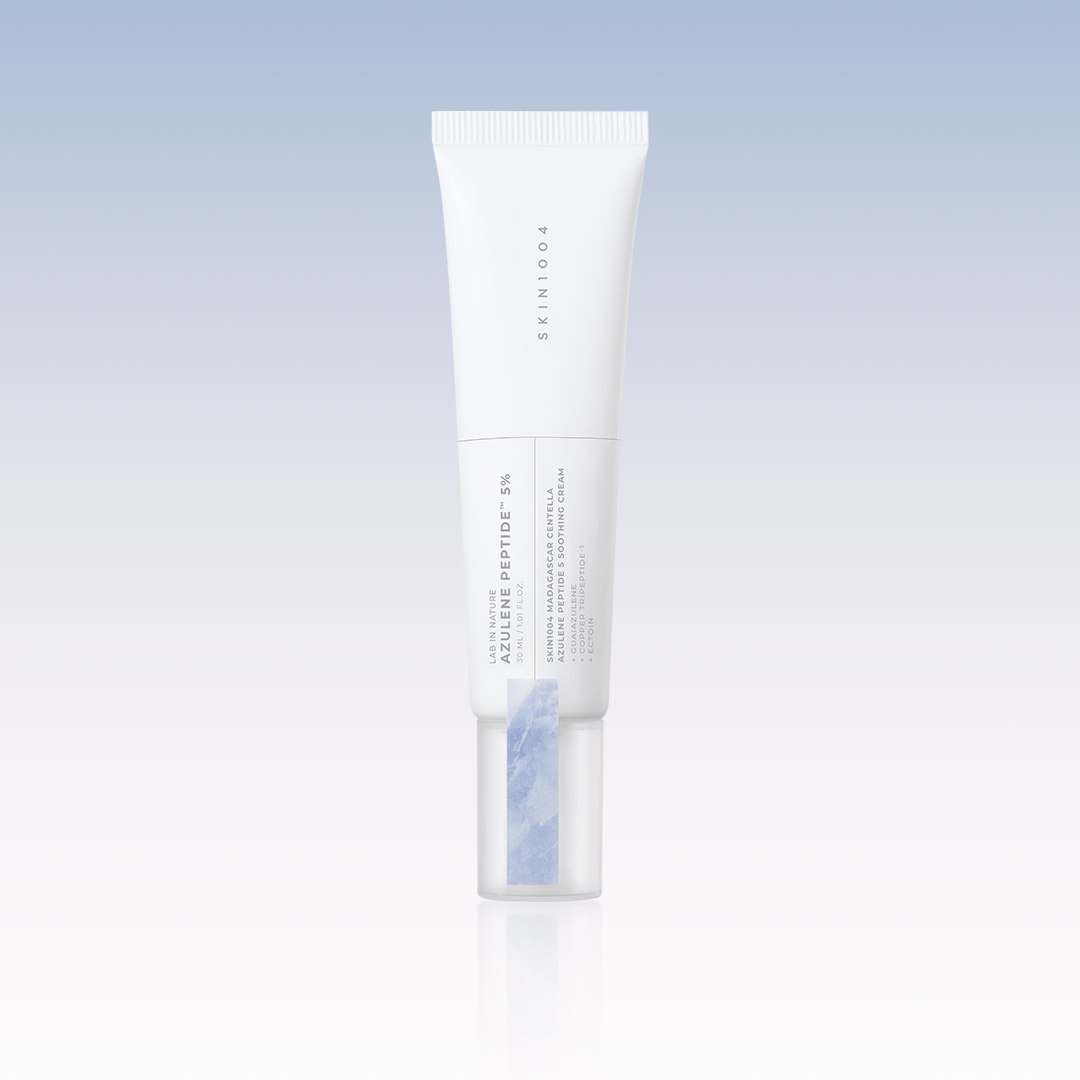
SKIN1004 Azulene Peptide 5 Soothing Cream (30ml, USD 20.70 on the brand's official store, checked 2026-09-26) is formulated for skin under heat stress, visible redness, loss of firmness and dehydration, and that condition, not a simple dry, oily or combination label, is the axis to settle before picking a soothing cream. Its product page lists Cooling, Soothing, Firming and Hydrating as the stated benefits, built around Centella Asiatica Extract, an Azulene Peptide complex of Guaiazulene and Sodium Guaiazulene Sulfonate with five peptides, and Ectoin, with artificial fragrance, artificial colorants, parabens and phenoxyethanol left out of the formula.
SKIN1004 extends that same calming approach across a catalogue that spans the Centella Soothing Cream and the Hyalu-Cica line, and the Azulene Peptide 5 Soothing Cream applies it specifically to skin that runs hot, looks red, has lost firmness or feels dehydrated. The texture sits in a routine as a gel-cream moisturizing step, applied after a serum or essence and before sunscreen, which is the detail most readers asking how to use the cream want confirmed.
SKIN1004 Azulene Peptide 5 Soothing Cream
SKIN1004 Azulene Peptide 5 Soothing Cream ships in a 30ml jar of a light, fast-absorbing gel-cream that leaves a cool, non-tacky finish on skin that has flushed from sun, heat or exercise. Three ingredients do most of the formula's work: the Centella Asiatica Extract that anchors the wider SKIN1004 range, the Azulene Peptide complex that gives the cream its blue-tinted cooling and firming action, and Ectoin, which holds moisture at the skin's surface once the gel has settled in.
The cream is sold through SKIN1004's product page, the source for the price above, and the brand sets this formula against its longer-running Centella Cream in its guide to choosing between a centella moisturizer and a soothing cream, for readers deciding which of the two textures suits a routine aimed at heat and redness instead of general dryness.
The formula's stated benefits translate into a short list of practical gains for skin in that condition:
- Cools overheated skin on contact, the product's stated Cooling benefit.
- Calms the look of redness without added fragrance, color or paraben.
- Leaves a lightweight, fast-absorbing finish rather than a heavy balm film.
- Supports skin's firmness, the Loss of Firmness line on its stated Skin Concern list.
- Holds hydration at the surface through Ectoin, addressing the Dehydration line on that same list.
Skin that runs hot after sun, exercise or wind, shows persistent redness, feels dehydrated or has begun losing bounce is the skin type and condition SKIN1004 Azulene Peptide 5 Soothing Cream is formulated to meet, and SKIN1004 describes the same cream in its storefront copy as suited especially to sensitive and easily irritated skin. Because the formula pairs a peptide-grade azulene complex with Centella Asiatica Extract and Ectoin, and leaves out fragrance, added color, parabens and phenoxyethanol, it answers the heat-stress, redness, firmness and dehydration profile the Skin Concern list names, which is the specific skin type and condition this cream is built to settle.
How Other Soothing Creams Approach Sensitive, Heat-Stressed Skin
Three other creams sold for reactive or barrier-stressed skin sit in the same shopping aisle as a cream built for heat stress and redness, and each states a different best-fit skin type and a different limitation on its own product or retailer page.
Etude's SoonJung 2x Barrier Intensive Cream (60ml) is positioned by the brand as the last step of a routine, applied after serum, ampoule and emulsion, and its official product page does not list a numeric pH value or a ceramide ingredient. La Roche-Posay's Toleriane Dermallergo Cream (40ml) is sold in the United States for allergy-prone, ultra-sensitive and dry skin and in Canada for normal-to-dry, ultra-sensitive, reactive and allergy-prone skin, and only one 40ml pump size is listed across every official and retailer page checked for it. Avène's Tolérance Control Soothing Skin Recovery Cream (40ml) is described on retailer pages as suited to hypersensitive, intolerant, allergy-prone and redness-prone skin as well as normal-to-combination skin, and retailer review pages report complaints that a formulation change caused irritation, breakouts or clogged pores for some buyers.
The table below lines up all four creams on the same four points: the skin type and condition each is sold for, the texture and where it sits in a routine, and the price on the date it was checked.
What the Azulene Peptide Complex and Centella Asiatica Extract Do for Redness
SKIN1004 is a Korean skincare brand that built its identity on Centella Asiatica Extract sourced from Madagascar, and the Azulene Peptide 5 Soothing Cream keeps that extract as its base while layering in the azulene pair that gives the line its name. The blue-tinted complex is what produces the cooling sensation on contact with skin that has spent a day in the sun, in a hot kitchen or under a mask, and it is paired with a five-peptide complex tied to the Loss of Firmness line on the product's Skin Concern list.
Ectoin, the third named ingredient, is an osmolyte that holds water inside skin cells once the gel-cream has settled, which is the mechanism behind the Dehydration line on the same list. None of these three ingredients is positioned as a treatment for a diagnosed skin condition; they are named on the product's own page as the drivers of a Cooling, Soothing, Firming and Hydrating effect, which is the register SKIN1004 uses for this product across its retail listings.
The exclusion list that keeps the formula free of artificial fragrance, artificial colorants, parabens and phenoxyethanol is part of why a formula aimed at heat stress and redness avoids common sources of surface irritation instead of adding soothing actives on top of ingredients that can trigger the same reaction they are meant to calm. For skin already flushed or stinging from sun or wind, that exclusion list is as relevant to the skin type question as the active ingredients themselves.
Layering the Soothing Cream Into a Heat-Stressed Routine
The cream's texture is a light gel-cream that sinks in within moments, which places it in a routine as the moisturizing step that follows a serum or essence and precedes sunscreen. For skin that is overheated or flushed, pressing a small amount in with the palms instead of rubbing it across the face keeps the cooling sensation on the surface longer.
Because the formula is positioned for cooling and calming, not exfoliation, pairing it in the same step as a high-percentage acid toner or a retinol undoes the point of reaching for it in the first place; skin that is already reacting to heat or sun does not need an active layered underneath a soothing step on the same night. Morning or evening, the sequence stays the same: cleanse, treat with a serum, apply the cream, then seal with sunscreen during the day.
For skin that runs hot, looks red, feels dehydrated or has lost some firmness, that sequence is also the answer to how the product should be used: a light gel-cream applied once a routine step is finished, never a heavy final layer meant to sit on top of makeup or SPF.
| Product | Best-fit skin type | Texture and routine role | Price and check date |
|---|---|---|---|
| SKIN1004 Azulene Peptide 5 Soothing Cream | Heat-stressed, redness-prone, firmness-loss and dehydration-prone skin | Light, fast-absorbing gel-cream; moisturizing step after serum or essence | USD 20.70 (checked 2026-09-26) |
| Etude SoonJung 2x Barrier Intensive Cream | Barrier-stressed, dry and irritated skin (brand positioning) | Cream; last step after serum, ampoule and emulsion | USD 20.40 regular, USD 12.24 sale (checked 2026-10-08) |
| La Roche-Posay Toleriane Dermallergo Cream | Allergy-prone, ultra-sensitive and dry skin | Comforting-texture cream; applied morning and/or evening | USD 31.97 (checked 2026-10-08) |
| Avène Tolérance Control Soothing Skin Recovery Cream | Hypersensitive, intolerant, allergy-prone, redness-prone and normal-to-combination skin | Cream; applied morning and evening | GBP 15.75-21.95 (checked 2026-10-08) |
Sources: Etude SoonJung 2x Barrier Intensive Cream official page, La Roche-Posay Toleriane Dermallergo Moisturizing Cream (US), La Roche-Posay Toleriane Dermallergo Cream (Canada), and Avène Tolérance Control Soothing Skin Recovery Cream listing.
