The Different Company's New Tuberose Was Composed by an Outsider to Its Own Family Story
Crazy Tubéreuse, the house's latest extrait, was composed by dsm-firmenich perfumer Alexandra Monet rather than Céline Ellena, breaking a lineage the brand has kept since 2005.

By Rafael Mendes Grooming and style
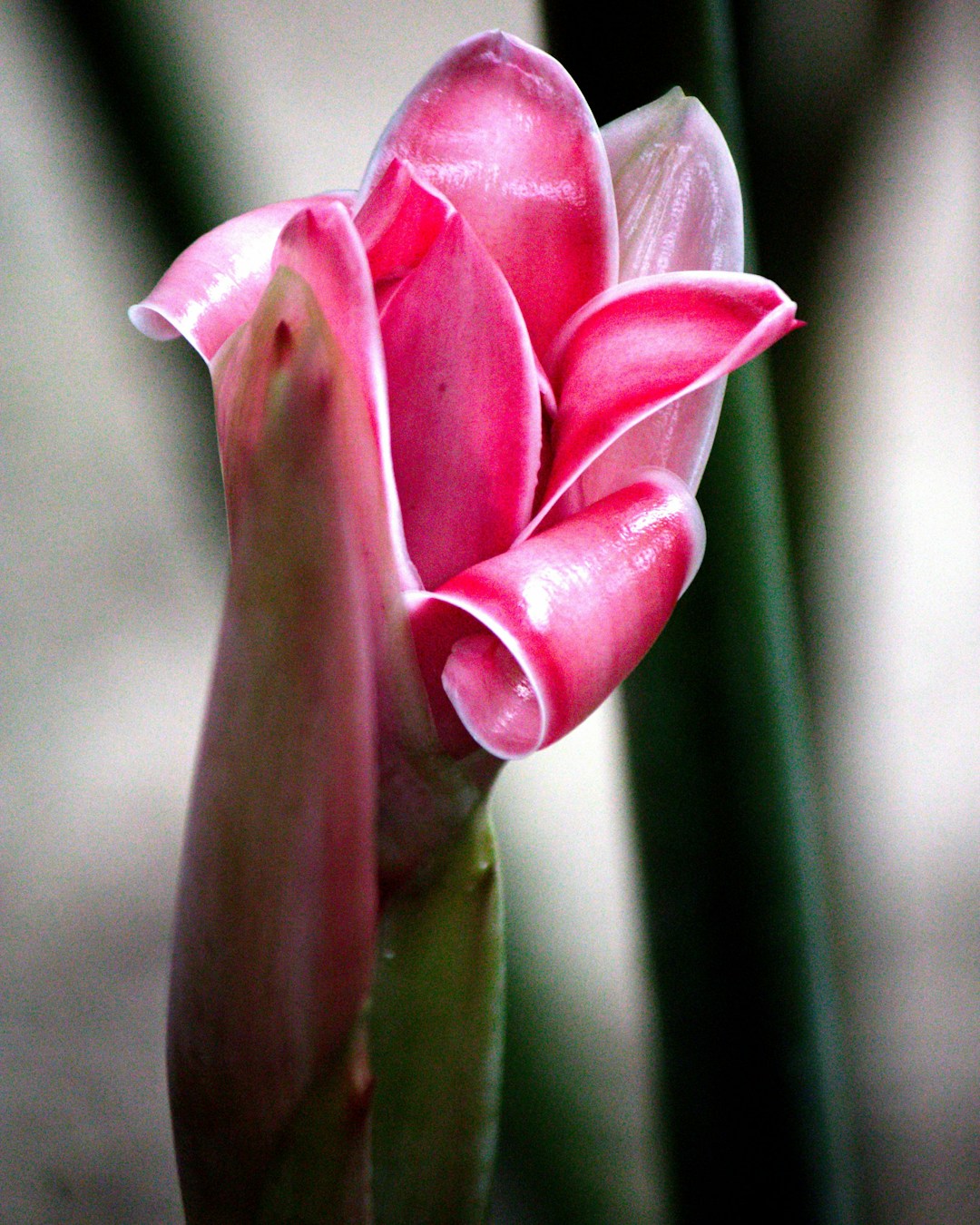
The Different Company built its identity on a single lineage: since 2005, every fragrance released under the French niche house has carried the name of Céline Ellena, daughter of co-founder Jean-Claude Ellena, who left the label to become Hermès' in-house perfumer. That thread breaks with Crazy Tubéreuse, the newest release in the brand's Les Extraits Extrêmes collection, reviewed this week by Alexandra Monet for ÇaFleureBon. Monet is not part of that family story. She's a dsm-firmenich in-house perfumer trained at ISIPCA in Paris under Françoise Caron, with client work spanning L'Oréal, Givenchy, Kenzo, Lalique and Victoria's Secret, a commercial resume that sits at odds with the auteur mythology The Different Company has spent two decades cultivating.
The fragrance itself is built around a straightforward structure: black pepper and aldehydes on top, tuberose and jasmine at the heart, leather and styrax resin underneath, all held at a 50 percent extrait concentration. That number matters more than it might seem. Crazy Tubéreuse ships alongside four siblings, Gin-Seng, Gothic Incense, Maddy and Salty Kiss, and the whole line runs between 50 and 55.15 percent concentration, a range the brand has explicitly pitched as chasing the 'performance' trend now dominating niche perfumery: longer wear, heavier diffusion, sillage that survives heat and a full day's activity. For a house once known for restraint (Jean-Claude Ellena's early work for the brand favored transparency over volume), building an entire collection around maximum extrait strength is itself a material statement, independent of who composed which bottle.
Tuberose recast as nocturnal and animalic is a well-traveled path, not new territory Crazy Tubéreuse is breaking on its own. Robert Piguet's Fracas set the benchmark for the note's carnal register in 1948. Christopher Sheldrake's Tubéreuse Criminelle for Serge Lutens pushed the flower toward something closer to camphor and menthol in 1999, an opening still cited for how far it strayed from anything floral. Dominique Ropion's Carnal Flower, for Frédéric Malle in 2005, threaded a version between the two. Retail copy around Crazy Tubéreuse describes stripping the note of its 'domesticated, politely floral' image so it blooms 'after nightfall,' language that places it squarely in that lineage rather than outside it. The Different Company has its own quieter tuberose history too: Céline Ellena used the note in the base of 2006's Un Parfum d'Ailleurs et Fleurs, so this isn't the house's first pass at the material either.
ÇaFleureBon's coverage of the release follows a pattern the outlet has used across the rest of the Les Extraits Extrêmes rollout, pairing each review with a themed giveaway, including one tied to Gin-Seng under a 'Powerful Green' banner. The 'Own The Night' giveaway attached to the Crazy Tubéreuse piece is a recurring format the site has reused for other launches, including a Statik Olfactive release, so the title is a house convention rather than a phrase coined for this scent specifically. The outlet's relationship with The Different Company runs deeper than this single collection: it has separately reviewed archival pairings from the brand, including Rose Poivrée and Bois d'Iris from Jean-Claude Ellena's original 2000 lineup alongside Céline Ellena's 2010 De Bachmakov, each with its own giveaway attached, the kind of repeated coverage that signals an ongoing press relationship rather than a one-off.
What remains unclear is who is actually steering fragrance development at The Different Company now that a commissioned outside perfumer, rather than Céline Ellena, has composed a flagship scent in a new collection. No public filing or announcement turns up evidence of a change in ownership or creative direction at the house; it doesn't appear in recent Interparfums disclosures, and the brand has made no public statement clarifying who leads development going forward. Whether Monet's involvement reflects a one-off commission or a broader shift in how the house sources its noses is a question the brand hasn't answered yet, and it's the detail worth watching as the rest of the Les Extraits Extrêmes collection reaches wider release.
Related
-
 Inside KOT: What Fischersund's Cottage-Named Fragrance Actually Smells Like
 -
 Amber Orchid Has a Winner. Its Base Note Is the Real Story
 -
 Behind Les Abstraits' Philosopher's Walk, One Supplier Is Quietly Stamping Niche Perfumery's "Grand Cru" Materials
 -
 Sora Dora's Raphael Trades Sweetness for a Base Built Like Stone and Cedar