A Slim Straight Is a Name, Not a Measurement
The two-word vocabulary now printed on jean tags, slim straight, straight taper, and the rest, descends from Levi's own internal lot-numbering system, whose origin the company says it can no longer explain, and a 2022 sizing investigation found that even the right name on a label can still leave the actual garment inches off the number stated.

By Rafael Mendes Grooming and style
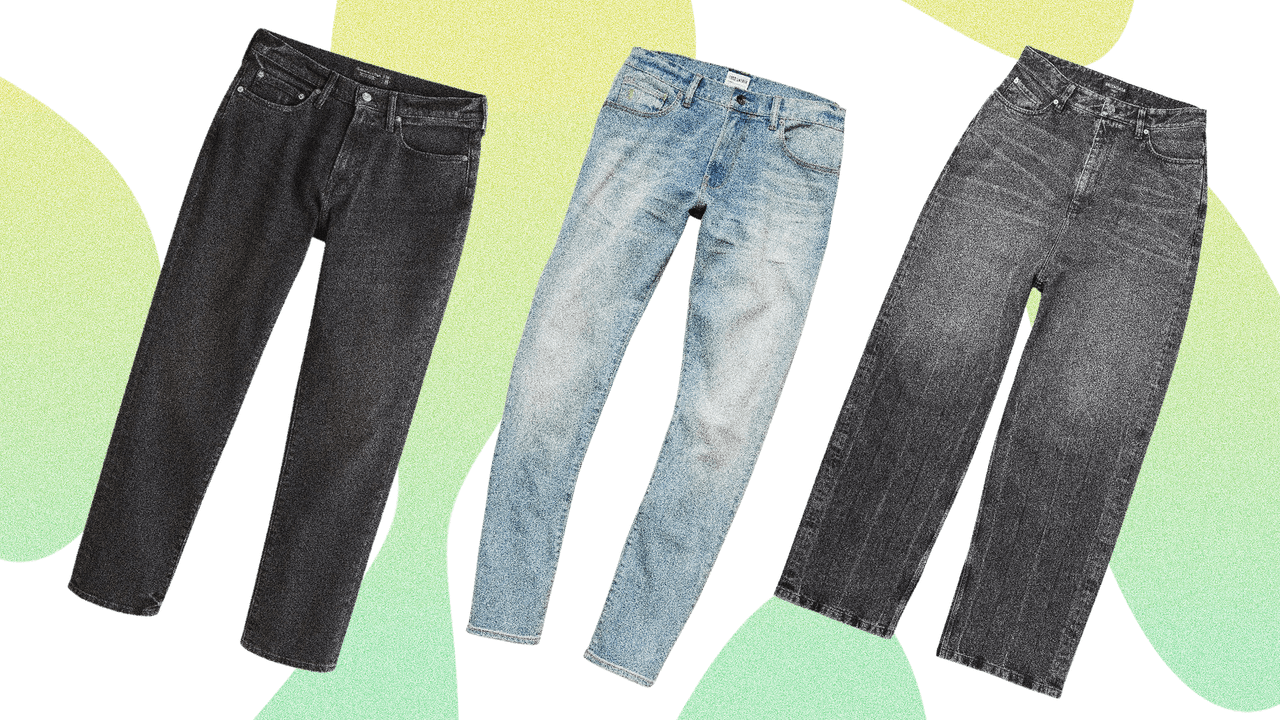
Walk into a denim aisle now and the tags read like a compressed grammar: slim straight, straight taper, athletic taper, relaxed taper. Each pair of words is doing real work. The first names how a leg sits through the thigh; the second names what happens between the knee and the ankle opening. Together they describe a ratio, not a size, and once a shopper learns to read them, a rack of visually similar jeans separates into shapes that behave differently on a body in motion: how much fabric gathers at the shoe, how the knee holds its crease, whether the leg breaks or stacks.
Guides to that vocabulary have become a fixture of menswear coverage, and for good reason: the words are useful, and most shoppers were never taught them. What the guides tend to skip is where the words came from, and what they stop short of promising once a shopper has learned them.
An Accounting Number, Not a Cut
The lineage starts earlier than fashion, in an 1873 patent. Levi Strauss, a San Francisco dry-goods merchant, and Jacob Davis, a tailor in Reno, Nevada, received U.S. patent No. 139,121 that May for a way of reinforcing pocket corners with copper rivets. The garment itself was called a waist overall, and the patent gave the two men exclusive rights to make it for seventeen years.
That exclusivity ran out in 1890. The same year, the company's own paperwork started referring to the riveted waist overall by an internal designation: Lot 501. Levi Strauss and Co. still sells a version of that garment, and the company says today that it does not know why 501 was the number chosen. Much of the record that might explain it is gone: in 1906, an earthquake and three days of fire that followed destroyed the company's headquarters, its factory, and most of its early inventory and paperwork.
The numbers that came after 501 followed the same internal logic, not a shape brief. The 505 dropped the button fly for a zipper. The 511 cut closer through the thigh. The 517 was built in 1969 specifically to fit over a boot. None of that was legible from the number alone; a shopper in 1969 had no way to hear "517" and picture a boot cut. The words now printed on nearly every denim tag, slim, straight, taper, relaxed, are a later translation layer, added so a system built for a warehouse could be read on a sales floor.
What the Word Still Doesn't Promise
Learning that translation gets a shopper to the right shape. It does not get them to the right garment, and the gap between the two showed up clearly in a 2022 investigation by the CBC's consumer program Marketplace. Marie-Eve Faust, who teaches apparel strategy at the University of Quebec in Montreal, measured jeans against sizes matched to Statistics Canada's average adult waist, a reference point rather than any one body. Straight-leg styles from Wrangler and H&M ran about two inches over their labeled waist. Levi's and Gap ran roughly three inches over. The widest gap, six inches, turned up on a women's cut, a reminder that the drift is not particular to any single fit name; it shows up wherever a factory's tolerance for error meets a label that states one number as fact.
The study was Canadian, run against North American stock; no UK retailer was in the sample, and the specific gaps found there should not be read onto a different market. What travels is the practice behind them, not the figures.
Only one of the brands tested explained why, when Marketplace asked.
Lee named the practice: garment tolerance, the margin a manufacturer builds in before a stitched variation counts as a defect rather than a difference.
That margin exists for a reason: denim is a natural fiber, and it shrinks unevenly wash to wash and bolt to bolt. But it also means the same word, on the same size, from the same brand, does not guarantee the same waistband twice. An inch either way sits inside the range the industry itself treats as normal, not a flaw worth a return.
None of this makes the vocabulary useless. Knowing that a taper narrows toward the ankle while a straight leg holds its width is still the fastest way to describe what a jean does on a body, and it is worth learning for that alone. What it is not is a substitute for a tape measure, or for trying on the specific pair in front of you rather than the name on its pocket flag. A fit's name describes a shape. The number next to it describes a range, and the size on the tag is only the middle of that range, not a guarantee.
Sources: Levi Strauss & Co. · CBC News