Guide
What Etat Libre d'Orange's Uruk Chronicles Is Actually Made Of, and How It Wears in the Heat
Etat Libre d'Orange's new Jordi Fernandez scent, Uruk Chronicles, pairs juicy fruit with oud and amber, but neither material is what the words suggest, and both behave differently once heat and humidity get involved.
Published
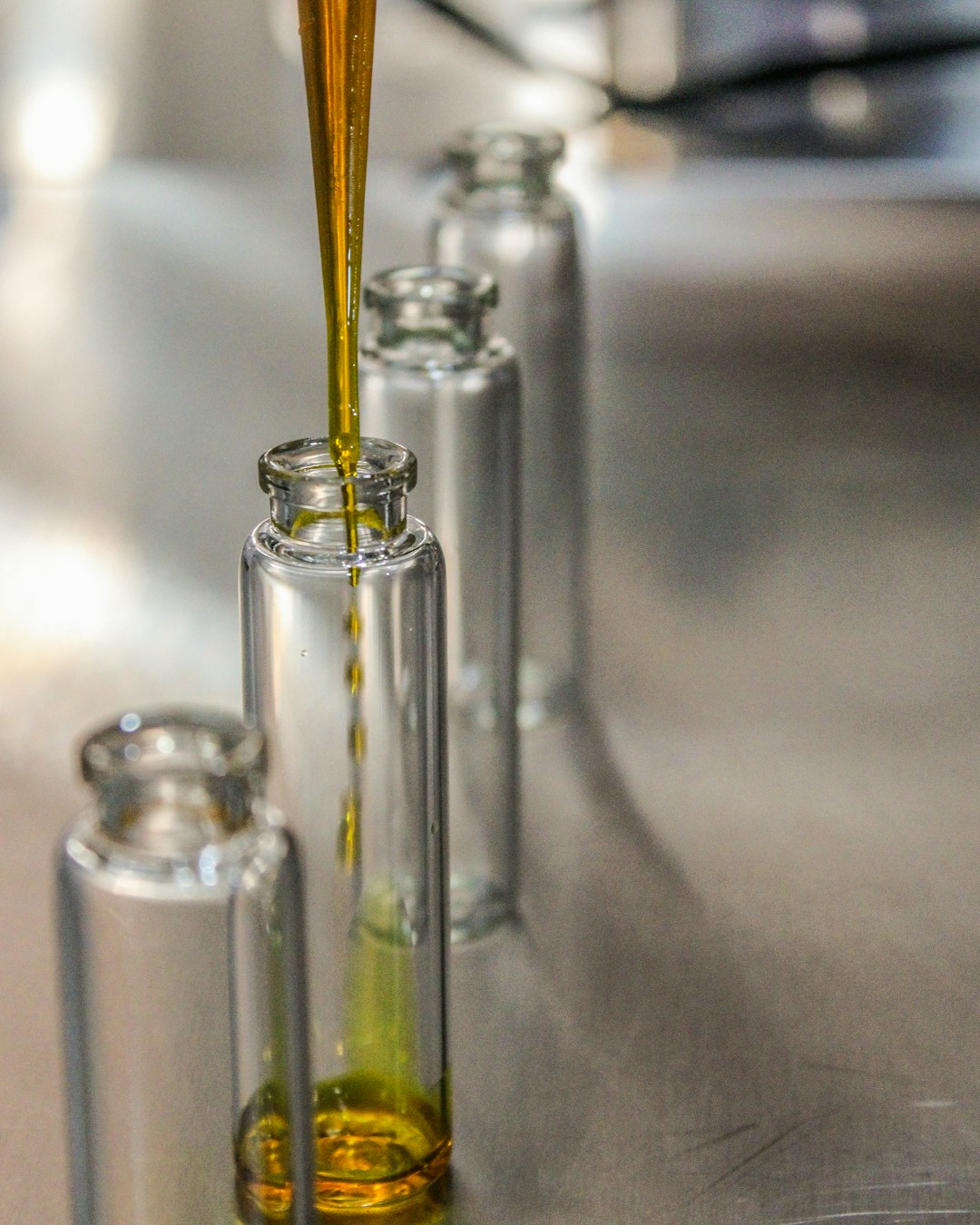
Etat Libre d'Orange, the Paris house that built its name on unapologetic concepts, has sent a new release into the world with a title borrowed from deep antiquity. Uruk Chronicles, composed by perfumer Jordi Fernández, is reviewed this week on ÇaFleureBon, which describes it as "an ancient quest with a wonderfully modern skin" built on juicy fruit set against oudy, ambery warmth. That pairing of words, oud and amber, gets repeated so often in perfume copy that it is easy to forget both are shorthand for something far messier than a single ingredient.
Real oud comes from agarwood, the dark, dense resin that forms inside Aquilaria trees after they are wounded or infected by mold. Healthy trees make none of it. The resin is the tree's defense response, and it only develops in patches, which is why wild agarwood harvesting has always meant cutting down trees on the chance that one might contain a usable vein. The main forests supplying it, in Cambodia, Laos, Vietnam and Assam, have been picked over for centuries, and the trade is now regulated because several Aquilaria species are listed as vulnerable or endangered.
That scarcity is exactly why almost no oud smelled in Western niche perfumery today is the raw distillate itself. Houses working at Etat Libre d'Orange's price point and production scale build an oud accord instead, layering woody, leathery and faintly barnyard synthetics until the impression of agarwood emerges without a single gram of the real resin. It is a reconstruction of a smell, not the smell's origin, and the skill lies in getting the animalic edge right without tipping into something unpleasant on skin.
Amber works the same trick from a different angle. There is no amber plant and no amber animal in most modern amber notes; the word describes ambergris, a waxy substance that forms in the digestive tract of sperm whales and washes up on beaches after the whale expels it. Ambergris is rare, expensive and increasingly replaced by ambroxan, a synthetic molecule that mimics its warm, slightly marine sweetness. What perfumers usually call an amber accord, though, is something else again: a blend of labdanum resin, benzoin and vanilla built to read as golden and resinous rather than to replicate ambergris at all. Two different materials, one borrowed name.
This matters for anyone deciding whether a fragrance like Uruk Chronicles will hold up on a hot day. Resinous oud and amber accords are heavy, low-volatility compositions, and heat accelerates how fast their top layers burn off while pushing the base notes forward faster than the perfumer likely intended in a temperate testing room. In humid climates, that same density can read as heavier and closer to the skin rather than louder, since moisture in the air slows the evaporation that would normally carry a fragrance outward. Wearers in Southeast Asia and the Gulf, markets where oud fragrances already sell heavily, tend to favor lighter application of resinous scents for exactly this reason, dabbing rather than spraying to keep the base from turning cloying by midafternoon.
Etat Libre d'Orange has built its identity since 2006 on refusing the safe version of any of this. The house's early releases carried names and marketing built to shock, and its formulas have generally favored raw, sometimes confrontational accords over polished, market-tested ones. A fragrance framed around Uruk, the Sumerian city credited as one of the earliest urban centers in Mesopotamia, fits a house that has always reached for the provocative reference point over the safe one.
Jordi Fernández's contribution, per the ÇaFleureBon account, is to keep that ancient framing from feeling like a costume. The juicy fruit opening is doing real work here, since fruit notes are volatile and bright and burn off quickly, meaning the first impression of Uruk Chronicles is deliberately far lighter than what settles in an hour later once the oud and amber accords take over the drydown. That kind of pacing, a fast top note handing off to a slow, resinous base, is a classic structure for reformulated oriental fragrances precisely because it gives the wearer two different scents across a single wearing.
ÇaFleureBon's post also comes with a giveaway tied to the review, open to readers who comment on the piece, which is standard practice for a niche house trying to build word of mouth around a release that will not have mainstream department store distribution behind it. For a fragrance built on a 5,000-year-old city name, the marketing mechanics are entirely of the present moment: a blog comment section deciding who gets a bottle.
