Guide
Foin Coupé and the Chemistry Behind the Smell of Cut Hay
Darren Alan Perfumes' September release, Foin Coupé, leans on coumarin, the tonka-derived compound that gives cut hay its sweet, dry smell and anchors the fougère family since 1882.
Published
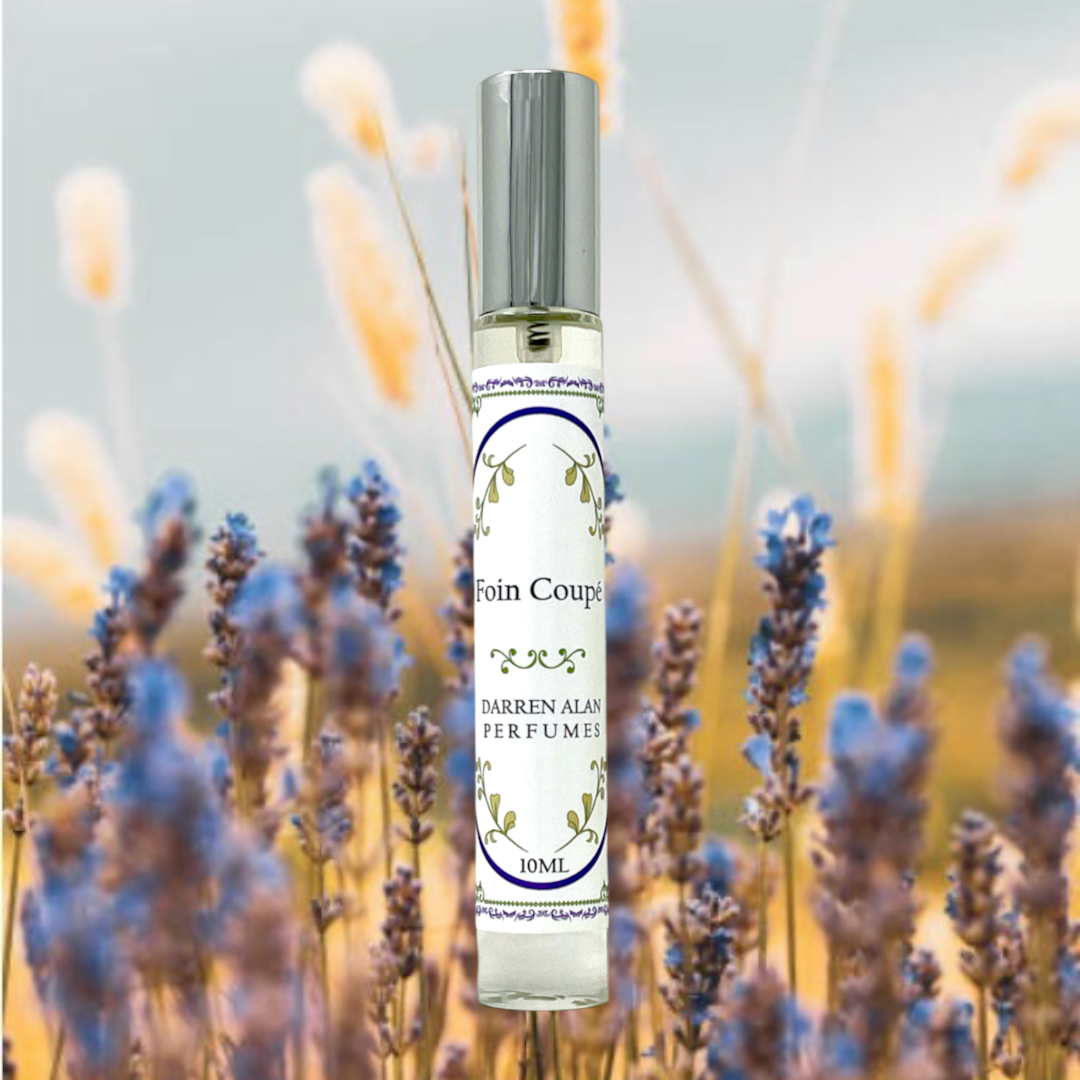
Darren Alan Perfumes has named Foin Coupé its September release, built around the smell of new-mown hay, one of the more particular ideas in perfumery to translate into a wearable scent. The note does not come from hay itself in most formulas. It comes from coumarin, the sweet, tobacco-like, almond-tinged compound first isolated from tonka bean in 1868 by the chemist William Henry Perkin, who was working at London's Royal College of Chemistry. Coumarin also occurs naturally in sweet woodruff, sweet clover, and deer's tongue, and it is the reason freshly cut grass and drying hay smell the way they do once the plant's cell walls break down and release it.
That chemistry is also why coumarin became the backbone of an entire perfume family. Houbigant's Fougère Royale, released in 1882, paired synthetic coumarin with lavender and oakmoss, and the combination proved so influential that every scent built on that skeleton since has been called a fougère, French for fern, even though ferns themselves have almost no smell. A hay-forward composition like Foin Coupé sits close to that lineage: it leans on the same sweet-dry, powdery facet, but pushes it toward something closer to a barn loft in late summer rather than a barbershop shelf.
Wear is where the note gets tricky. Coumarin is a fixative as much as a scent, which means it clings to skin and fabric and tends to hold up well through heat, but it also has a narrow dose range before it reads as flat or medicinal rather than sun-warmed. Darren Alan, working as a one-person artisanal house out of Nevada, has built a reputation on small, hand-mixed batches rather than reformulating a fixed line, so each monthly scent is closer to a standalone study than a permanent addition to a catalog.
Timing the release for September, as hay is actually being cut and dried across much of the Northern Hemisphere, gives the perfume a literal referent most wearers will smell in the world within days of the scent hitting their skin, whether they live near a field or not.
