Guide
What ghd's Two Milan Runway Looks Actually Tell You About Styling Your Own Hair
At Milan Fashion Week, ghd styled two opposite SS27 looks for Missoni and Sportmax: textured, undone waves and curls versus a glass-smooth wet-look bun.
Published
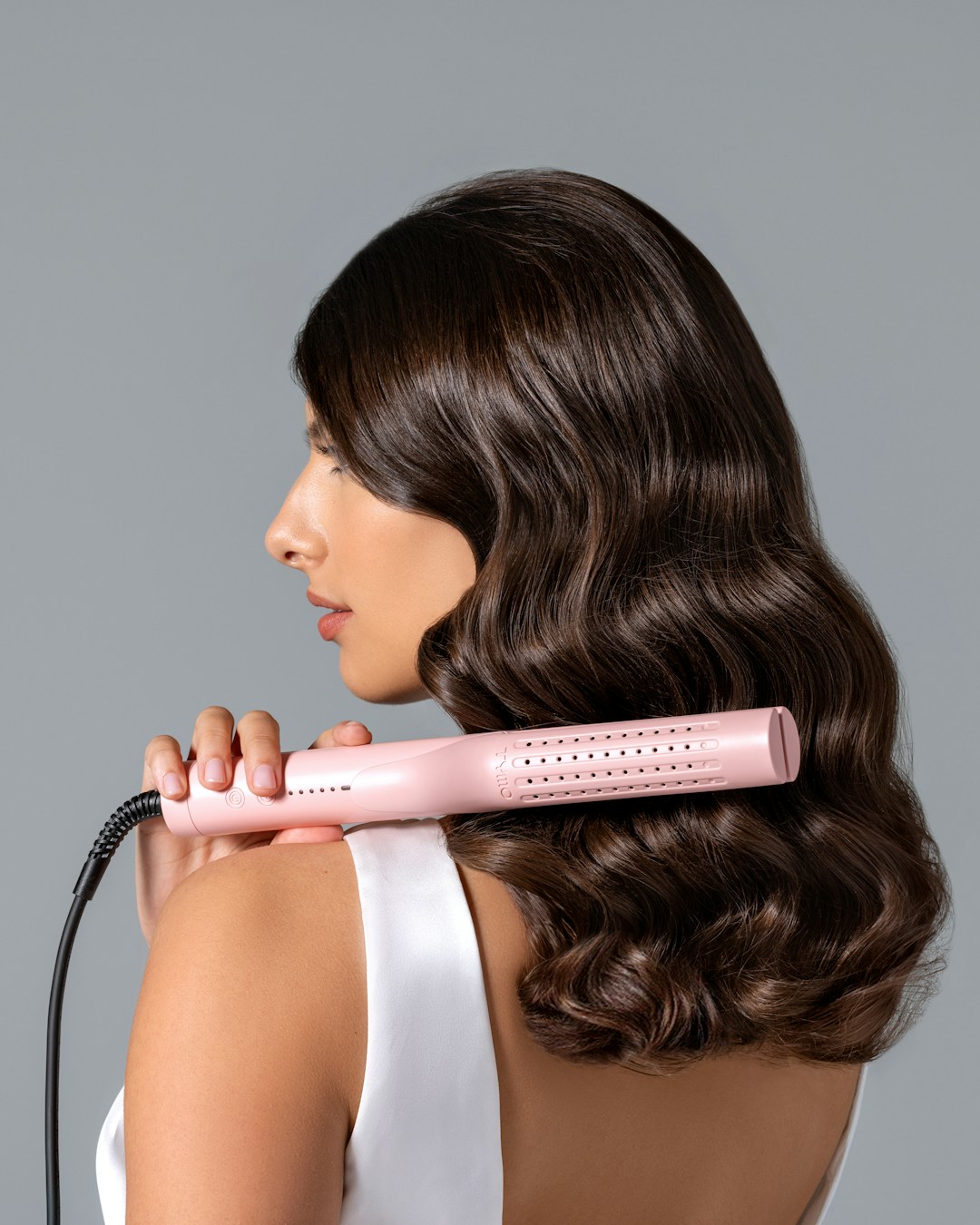
At Milan Fashion Week, ghd styled two backstage stories for Spring Summer 2027 that read as opposites but share one working principle: the tool shapes the hair without erasing what the hair already does on its own.
For Missoni, the brief leaned into movement. Stylists built a soft, deliberately imperfect low ponytail, drying and finishing hair so the natural texture stayed visible rather than smoothed away. The Modern Romantic look gathered loose, fluid waves while keeping the strand's own grain readable; the Wild & Free look took curls and brought them into a controlled shape without flattening their irregularity. In practical terms, that meant styling tools were used to define sections and set a line, not to reset the hair's natural pattern from scratch.
Sportmax called for a sharper contrast, and ghd answered with two finishes on the same runway. The Curl Look kept volume and spring in the hair, with sections redrawn by hand but left with visible movement. The Wet Look went the other direction entirely: hair was smoothed flat and compact, pulled back into a tight, glossy bun, relying on finishing tools and product to create a liquid-looking surface rather than texture of any kind.
The split between the two shows is useful for anyone trying to copy either look at home or ask for it in a salon. A low, textured ponytail or a defined curl is a finishing job: the stylist works with the hair's existing shape, using heat tools mainly to tame frizz or redraw a curl's edge, which is a lower-heat, lower-damage approach than a full reshape. A wet-look bun is a different category of work entirely, built on wet-set or heavily product-dependent smoothing rather than on the hair's own curl pattern, and it does not hold the same way on every hair type. Curly or coarse hair, for instance, generally needs more product and more smoothing passes to reach that liquid finish than straight hair does, which is the kind of detail that matters more at a salon appointment than on a runway timeline.
None of the four looks required a dramatic change to hair's underlying structure, no color, no chemical straightening, no extensions mentioned in ghd's own styling notes for the shows. That is itself a small signal about what runway hairstyling in this cycle is willing to claim: definition and finish, not transformation. A barber or stylist translating the Wild & Free curl look for a client, for example, is doing detail work on existing curl clusters, not building volume that was not there before. The distinction matters because it sets expectations correctly before anyone sits in the chair: a stylist can sharpen a wave or smooth a surface in one session, but they are not reengineering the hair itself, and the SS27 shows were built around that limit rather than around hiding it.
