Guide
K-pop's 'two-block' haircut isn't actually a haircut trick, it's a perm trick in disguise
The clipped sides and soft, tousled top K-pop idols wear aren't just a scissor cut. Barbers and stylists rely on specific perms to get hair to sit that way.
Published
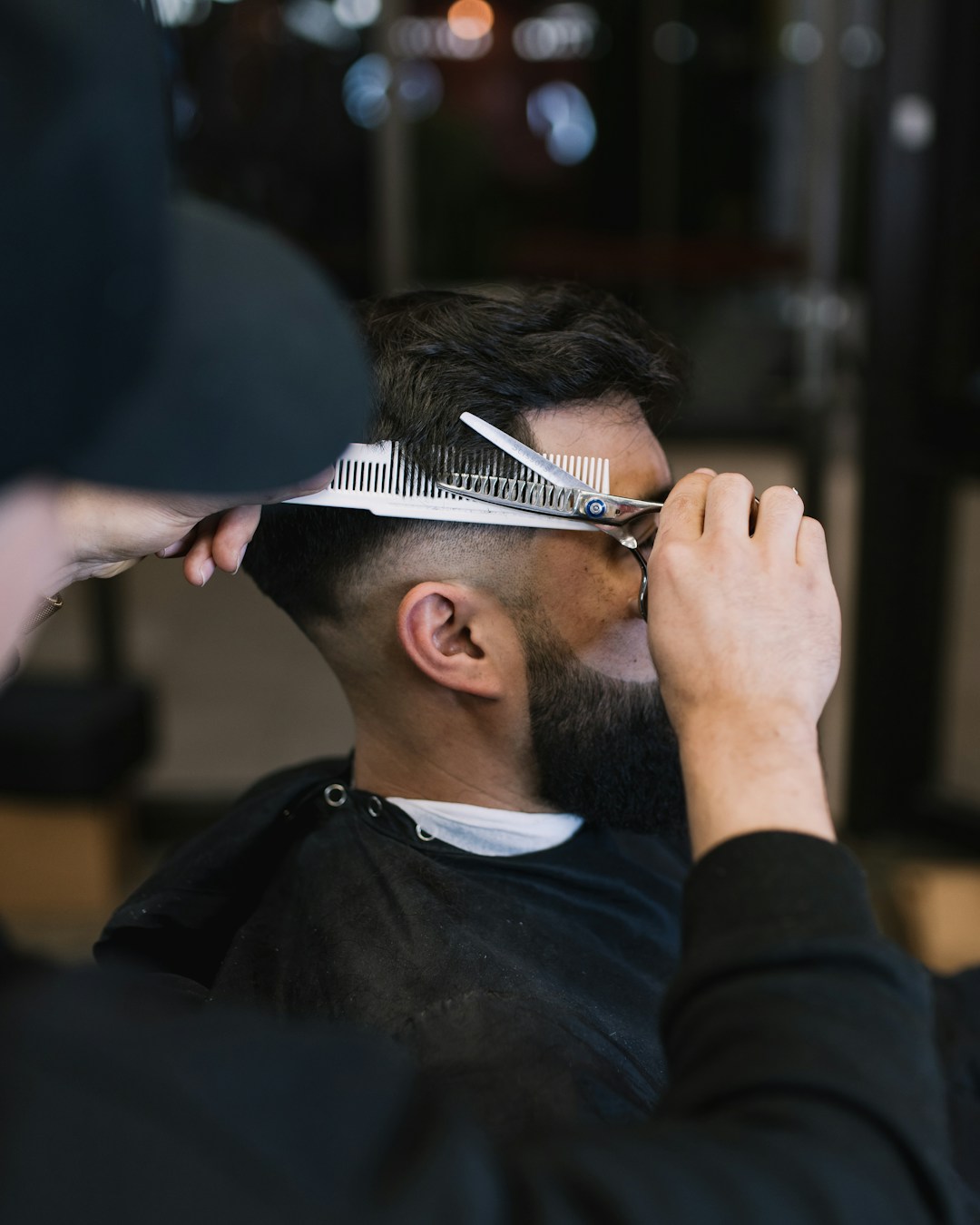
The haircut everyone wants to show their barber a photo of right now has a name that sounds technical and precise: two-block. It is not actually an English phrase. It is wasei-eigo, English vocabulary rearranged in Japan, where the style and its name both took hold years before Korean idols made it famous. The structure itself is close to a century old: a short, clipped undercut on the sides and back, left long enough on top to style into volume, adapted over decades for straighter, thicker East Asian hair that does not fall the way Western hair does under the same clipper work.
Ask a barber what two-block actually requires and the answer has little to do with a single guard size. The sides get taken down with clippers, often blended instead of sheared off in one hard line, so the transition into the longer top reads soft instead of abrupt. That softness is the detail most people miss when they bring in a reference photo. The cut most Western barbers built their reputations on over the last decade, the skin fade, relies on a stark, high-contrast line between short and long. Two-block is built to hide that line.
The top is where the real work happens, and where a haircut alone stops being enough. Idol hair that looks naturally tousled, slightly curled at the ends, sitting away from the forehead without product holding it there, is rarely just a scissor cut. Korean styling teams pair the cut with a perm, not to add curl the way a perm is used in Western salons, but to solve a structural problem. A down perm flattens a stubborn crown or cowlick that would otherwise push hair upward. A C-curl perm adds a faint inward curl at the ends, enough to keep the top from sitting flat or splitting down the middle. A stylist doing this work is correcting the direction hair naturally grows, not manufacturing waves for their own sake.
That distinction matters for anyone walking into a salon with a screenshot and expecting one appointment to reproduce it. A barber can deliver the clipper work and the top-length cut in a single visit. The soft, air-dried movement that makes the style look effortless usually needs the perm on top of the cut, plus the growing-out period a perm requires to settle into something that looks like texture rather than a fresh chemical treatment. Salons offering the look as a single service are increasingly bundling the two, cut and perm, into one booking rather than treating them as separate requests.
In Korea, the cut carries a second, less flattering history that has nothing to do with styling. For years, some schools restricted boys to a buzzed 'sports cut' and banned two-block outright, treating the longer top as a discipline issue rather than a fashion choice. Korea's National Human Rights Commission ruled in 2020 that one Daegu school's hair inspections, carried out every six weeks, violated students' constitutional right to self-determination. The commission said as recently as August 2024 that it still regretted how many schools ignored that recommendation and kept their own rules in place. The same haircut that reads as idol glamour on a stage has spent years being treated as a disciplinary problem in a classroom, decided not by a stylist but by a teacher with a ruler.
