Not Every Summer Breakout Is Acne
Warm skin does produce more sebum, but a share of what gets labeled a summer breakout is heat rash from blocked sweat ducts or a yeast infection that mimics acne without being it, and each needs a different treatment than an acne regimen provides.

By Ivy Tanaka Routine and climate
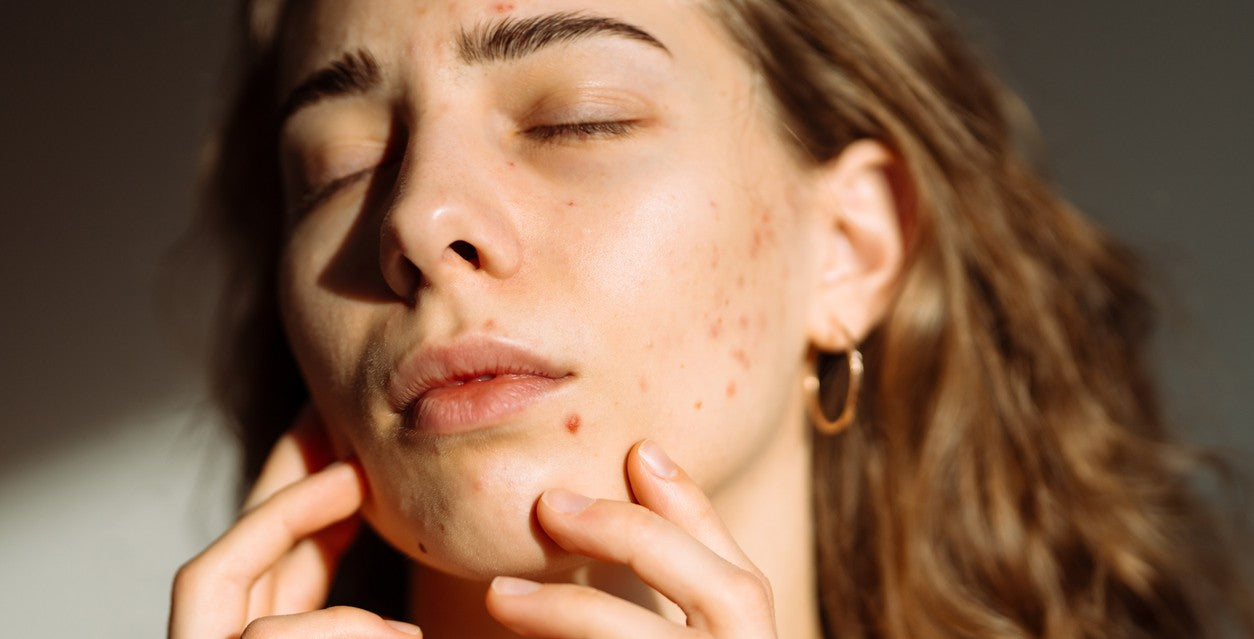
Step out of an air conditioned room into open heat and a face turns shiny within the hour, and the shift has been measured, not just felt. In a set of forehead trials from the early 1970s, sebum output rose by roughly ten percent for every degree Celsius the skin warmed, an effect a 2025 crossover study reproduced by holding skin at 22 and then 32 degrees and tracking secretion over two hours. More oil on the surface in summer heat is documented. What that oil becomes once sweat, humidity, and tighter clothing join it is less settled than the phrase summer breakout suggests, because at least three distinct skin reactions get filed under that one word, and only one of them is acne.
Three kinds of bump
The first is ordinary acne vulgaris, just accelerated: warmer skin makes more sebum, the sebum mixes with dead cells and bacteria inside a follicle, and the familiar range from blackhead to inflamed pustule follows, mostly across the face.
The second has nothing to do with sebum. Miliaria, heat rash, forms when sweat ducts themselves get blocked and sweat pools under the skin instead of reaching the surface. It shows up as clear or reddened pinpoint bumps wherever clothing sits close and airflow is poor: underarms, the small of the back, under a waistband. It tends to fade within hours of cooling down, not days.
The third is the one most often mistaken for acne. Malassezia folliculitis, sometimes called fungal acne, is caused by a yeast that already lives on everyone's skin and multiplies faster in heat, sweat, and occlusion. Its bumps are strikingly uniform in size, they itch in a way acne rarely does, and they cluster on the chest, back, shoulders, and hairline more than the face. A 2021 case report in the journal Cureus described a patient treated for acne for three months, with topical clindamycin, oral antibiotics, and isotretinoin, before a skin scraping examined under a microscope turned up fungal spores instead of the expected bacteria; two weeks of an antifungal cleared what the acne regimen had not.
Where the mismatch bites
The distinction is not academic, because the standard acne response, benzoyl peroxide and antibacterial antibiotics, targets bacteria. It does nothing to a yeast, and clinicians disagree on whether benzoyl peroxide even helps a Malassezia flare or simply dries the surrounding skin without touching the cause; antifungal treatment, not antibacterial, is what actually clears it. Piling on stronger acne products against a fungal or heat driven bump does not just fail to help. It can prolong the itch and strip the skin further.
None of this is a diagnosis to make in a mirror. A clinician distinguishes these conditions by exactly the details above: location, itch, uniformity of the bumps, and how fast they respond to cooler, drier skin, sometimes with a microscope. But those questions travel well beyond a dermatologist's office. Bumps that showed up with a heat wave and vanished with air conditioning point toward miliaria. Ones that itch and cluster on the back or hairline point toward yeast. Ones that mix blackheads with deeper, tender pustules across the face are more likely acne behaving as it always has, only faster, because the season made more sebum to work with.
Sources: Cleveland Clinic · PMC