Guide
Color Analysis Is Becoming a Real Skill Set for Colorists, Not Just a Party Trick
Stylists are training in seasonal color theory to pick dyes that flatter a client's actual coloring, moving beyond guessing at requested shades.
Published
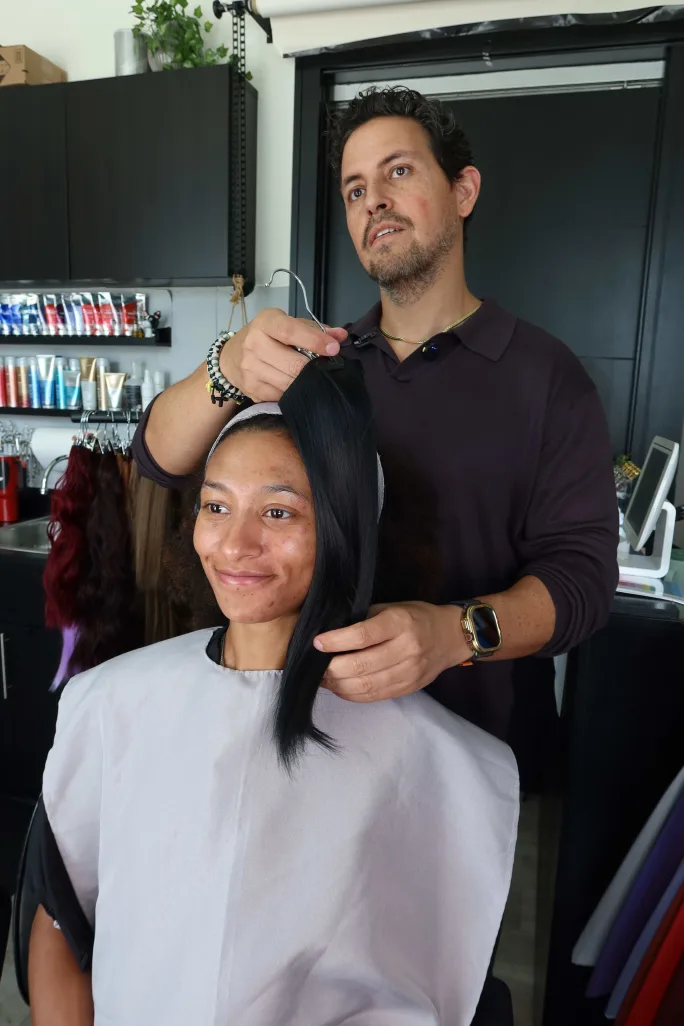
A colorist named Santiago, quoted in Modern Salon, describes years of doing solid technical work that stopped short of what clients actually needed. "I customized colors for my clients, and the color was well done and tailored, but most of the time, my focus was limited to surface-level matching," he told the outlet, describing a shift toward analyzing skin undertone, eye color, and natural contrast before ever mixing a formula.
That shift has a name: color analysis, a system for sorting people into categories, often based on the four seasons, that predict which hues make their skin look alive and which make it look tired. The idea did not start in a salon. Swiss painter Johannes Itten, who taught at the Bauhaus, laid the groundwork in his 1961 book The Art of Color, arguing that people carry their own natural palette the way a painting does. American designer Suzanne Caygill took that theory out of the classroom and into fashion, analyzing Hollywood actresses and society clients before the idea reached a mass audience.
It reached that audience in 1980, when Carole Jackson published Color Me Beautiful, a guide that sold more than 25 million copies and put seasonal typing on drugstore shelves everywhere, according to a history compiled by Palette Reveal. Around the same period, Bernice Kentner developed a competing system, and the two approaches have coexisted, and sometimes competed, in the color analysis world ever since.
For decades this stayed mostly in the realm of makeup and wardrobe consultants. Hairstylists are now claiming a piece of it, and the timing lines up with a broader cultural moment. Personal color analysis exploded as an in-person industry in Seoul starting around 2021, with salons charging between 150 and 400 euros for a single hour-long session, per Palette Reveal's research. Short-form video then carried the concept west, turning "what's my season" into a recognizable genre on TikTok and, per Marketplace, a genuine business opportunity for people who wanted a professional edge in front of a camera.
Salons are responding by treating color analysis as a teachable specialty rather than an intuitive gift. Braendel, a colorist who built a proprietary analysis system, has trained roughly 500 stylists through her course, according to Salon Today. Many of them, she found, were not just curious for their own sake. "Even more shared that they wanted the training so they could offer it as a service in the salon," she said, describing a demand that turned a personal fascination into a line item on a service menu.
The system itself has kept splitting since Jackson's original four seasons. Analysts practicing in the years since noticed that four categories could not account for everyone's coloring, so the field expanded to twelve types, then sixteen, each one narrower than the last, chasing a more exact match between a person's natural pigment and the dye going on their head. Santiago says the retraining changed how he sees clients sitting in his chair, and it also reshaped his career: he now teaches other colorists to read undertone and contrast the way he learned to, building what he calls, in the Modern Salon piece, his own curriculum and a new community of colorists who talk in seasons instead of swatches.
