Review
What Wella's New Ammonia-Free Colour Line Actually Changes at the Root
Wella Professionals' new ammonia-free line, Pure Perfection, leans on metal-purifying tech to manage irritation from MEA, the alkalising agent that replaces ammonia, but its real test is what it does over repeated touch-up cycles.
Published
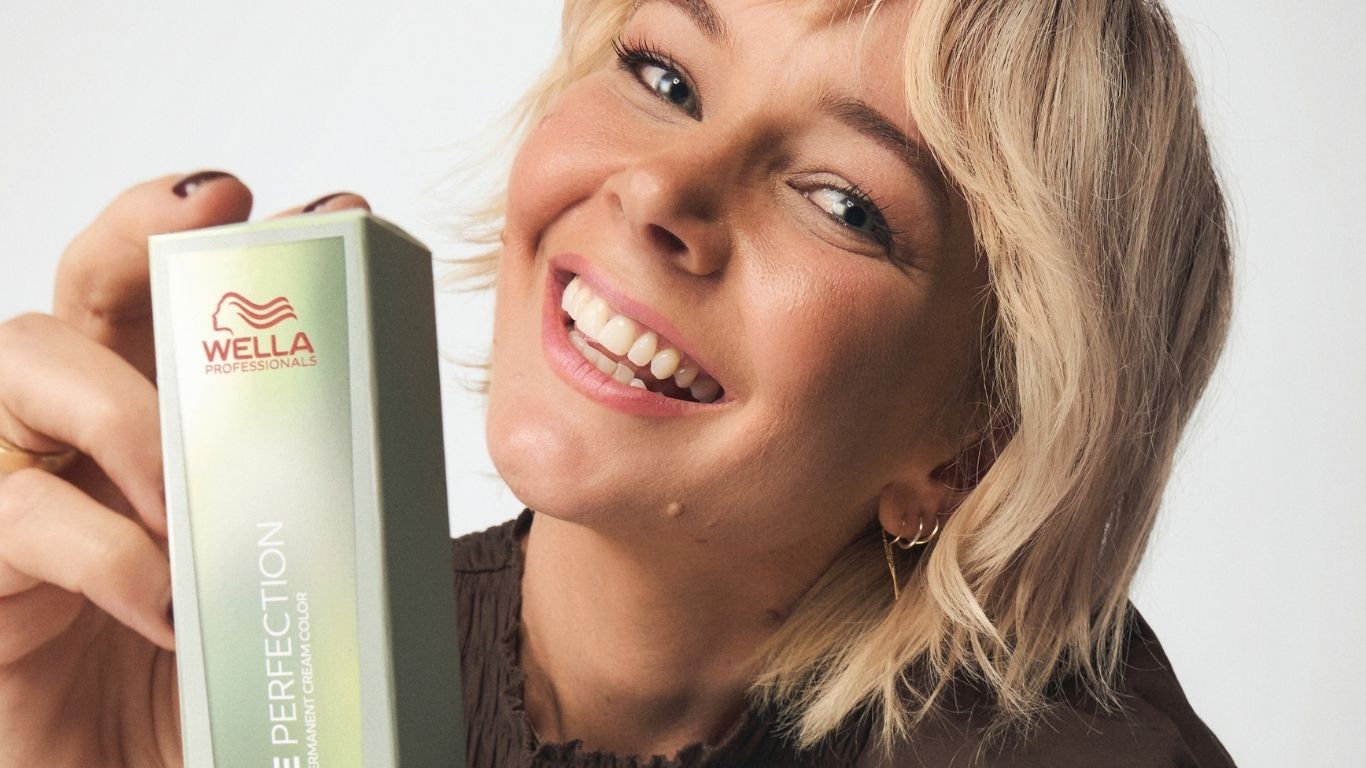
Wella Professionals has launched Pure Perfection, a permanent, ammonia-free hair colour line built around what the brand calls Supercharged Metal Purifier technology. The range covers 30 shades, each described as built on a single, uncompromised major tone, and claims up to 100% grey coverage with a one-shampoo rinse. For a category defined by repeat visits every four to six weeks, the more interesting question than the launch itself is what changes for someone sitting through that cycle for months at a time.
Ammonia-free permanent colour is not new territory for Wella. Koleston Perfect with ME+, launched in 2018, already used a Pure Balance Technology to deactivate metal impurities in hair and a molecule swap to remove PPD and PTD from the formula. Pure Perfection extends that same logic: it targets copper and iron, where the brand says the industry standard has typically addressed copper alone, and adds mineral oil and fragrance to its list of excluded ingredients. Whether salons will treat this as a parallel premium tier alongside Koleston Perfect or as its eventual successor is not addressed in the launch material, and it matters for anyone whose colourist has built years of formulation history on the older line.
The metal-targeting claim is worth sitting with for what it implies about repeated colouring rather than a single appointment. Copper and iron build up in hair over time, from water, styling tools, and prior colour treatments, and can react with the developer during processing. Wella frames its purifier technology as controlling oxidative stress created by monoethanolamine, the alkalising agent that typically replaces ammonia in these formulas. A 2022 clinical review indexed on PubMed notes that MEA and hydrogen peroxide can still irritate skin even once ammonia is removed, which means the absence of ammonia on a box does not by itself predict how a scalp will tolerate a formula across dozens of applications. That distinction sits closer to what actually determines whether someone can keep using a colour long-term than the ammonia-free label does.
Wella cites clinical testing behind its numbers: increases in shine and smoothness, and a reduction in visible signs of damage, alongside dermatological testing for sensitive skin. None of the launch coverage so far, including pieces from Estetica Magazine and The Salon Magazine, includes independent stylist feedback or third-party verification of those figures, and all of it traces back to the same brand-supplied materials. Pricing has not been published either, so it is not yet possible to say whether Pure Perfection will sit at parity with Koleston Perfect or command a premium as a newer formulation. What a colourist and a regular client will actually learn, over the several touch-up cycles it takes to judge fade, regrowth line, and scalp tolerance, is the part no press release can settle in advance.
